

WHAT IS BINDING FLEX?
Binding flex refers to how stiff or soft the binding is — primarily in the highback (the tall bit at the back of your heel) but also in the baseplate. Just like snowboard flex, it’s usually rated on a scale of 1–10, where 1 is noodle-soft and 10 is race-stiff. Most riders sit somewhere in the 3–7 range depending on how and where they ride.
Soft flex bindings move with you. Stiff flex bindings transfer your energy directly into the board. Neither is better — they’re tools for different jobs.

SOFT FLEX BINDINGS — FORGIVING AND FUN
A softer binding (roughly 1–4 on the scale) gives you more freedom of movement. Your ankles and knees can flex naturally, which makes buttering, pressing, and jibbing rails a lot easier. The binding absorbs some of the impact rather than sending it all straight into the board, which also makes it more comfortable on rough snow or choppy groomers.
The trade-off is precision. At speed, a very soft binding can feel a bit washy — like there’s a slight delay between what you’re telling the board to do and what actually happens. For beginners or park riders, that’s not a big deal. For someone who likes to carve hard at pace, it can get frustrating.
If you want a softer flex binding perfect that is perfect for newer riders and for freestyle take a look at the Union Flite Pro

STIFF FLEX BINDINGS — POWER AND PRECISION
At the other end of the scale, a stiffer binding (roughly 6–10) locks your foot in and transfers energy directly into the edge of your board with almost no delay. When you lean into a heel-side carve, the board responds immediately. There’s no slop, no lag, just instant feedback.
This is what you want if you ride fast, carve aggressively, or spend a lot of time on steep terrain. It keeps everything tight and controlled when the stakes are higher. The downside is that a stiff binding can be punishing on rough snow, and makes jibbing and pressing significantly harder — you’re working against the binding rather than with it.
If you want a stiffer, performance-focused binding built for riders who like to push hard take a look at the Union Falcor

MID FLEX — THE SWEET SPOT FOR MOST RIDERS
If you’re not sure where you sit, a mid-flex binding (around 4–6) is almost always the right call. It’s versatile enough to handle everything from park laps to off-piste charging without being rubbish at either. Most of the best-selling bindings we stock fall into this bracket — and for good reason. The vast majority of riders spend their weeks mixing up terrain, and a mid-flex binding keeps up with all of it.
One of the most popular mid-flex bindings out there, and for good reason. Shop it here → Burton Genesis
Don’t Forget to Match Your Binding Flex to Your Boot Flex
This is something a lot of people miss. If you pair a very soft boot with a very stiff binding — or vice versa — the setup feels wrong. A stiff binding on a soft boot will overwhelm the boot and collapse your ankle support. A soft binding on a stiff boot can feel disconnected and unresponsive.
As a rule of thumb, try to keep your boot and binding flex within a couple of points of each other. If you’re not sure, bring your boots into the shop and we can match them up properly.
The Highback Matters Too
Binding flex isn’t just about the baseplate — the highback plays a huge role. A taller, stiffer highback gives you more heel-side response and is great for hard carving. A shorter / softer highback is mellower and more forgiving, which suits park riders and anyone who prefers a more relaxed ride.
Most bindings let you adjust the forward lean on the highback — which effectively changes how quickly the board responds to your heel-side movements. It's worth having a play with this and see what you prefer when riding.
So What Should You Buy?
Here’s the simple version:
- Beginner or park rider? Go soft to medium flex. More forgiveness, more fun, easier to learn on.
- All-mountain rider who does a bit of everything? Mid flex is your friend. Versatile, capable, no compromises.
- Aggressive carver or fast freerider? Go stiffer. You want that direct response and edge control at speed.
And as always — if you’re not sure, just ask us. We ride all the bindings we stock and we’re not going to flog you something that doesn’t suit the way you ride. Give us a call on 01252 612223, drop us a message, or come into the shop in Fleet and we’ll sort you out.
Shop Snowboard Bindings
View all-
 Pre-order
Union Source FC Snowboard Bindings 2027
Regular price £899.95 GBPUnit price -

Nidecker Supermatic Carbon Snowboard Bindings 2027
Regular price £529.95 GBPUnit price -
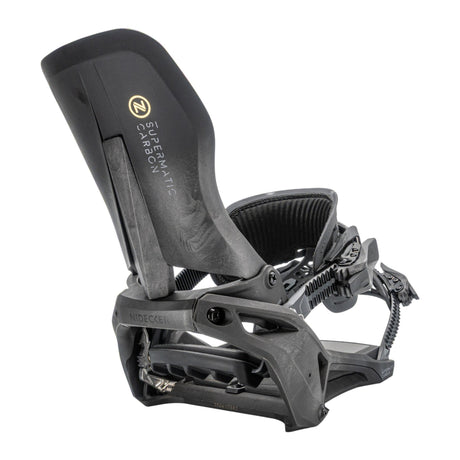 Save £79.00
Nidecker Supermatic Carbon Snowboard Bindings 2026
Sale price £439.95 GBP Regular price £518.95Unit price -

Nidecker LT Supermatic Snowboard Bindings 2027
Regular price £419.95 GBPUnit price -
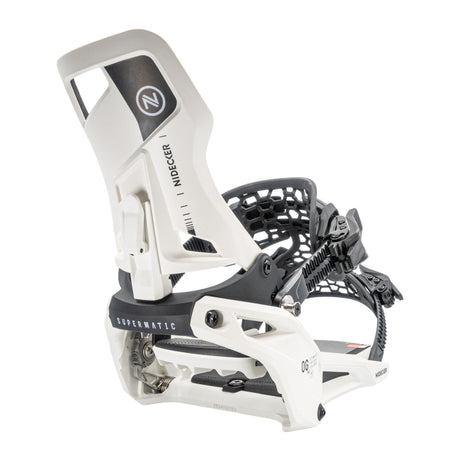
Nidecker Supermatic OG Snowboard Bindings 2027
Regular price £374.95 GBPUnit price -

Union Falcor Snowboard Bindings 2027
Regular price £364.95 GBPUnit price -
 Pre-order
Burton Step On® Genesis Re:Flex™ Snowboard Bindings
Regular price £359.95 GBPUnit price -

Rome Katana Pro FASE® AsymWrap™ Snowboard Bindings 2027
Regular price £359.95 GBPUnit price


